


Why Has My Credit Score Gone Down? A Calm UK Checklist
A credit score drop is usually explainable. This guide walks through the most common UK reasons (including a few that surprise people), how to confirm the cause on your credit report, and what to do next without panic.

Quick Answer
Why has my credit score gone down?
In the UK, a score drop usually comes from one of six changes: a missed or late payment, higher credit card utilisation, a recent application (hard search), closing or opening accounts, address or electoral register mismatches, or an error or fraud marker on your file.
The fastest way to find the real reason is to check your credit report (not just the score) and compare what changed since the last time you looked.
First, a quick reality check (so you don’t chase the wrong thing)
When people search why has my credit score gone down, they’re usually looking for a single culprit. But UK credit scores are a moving snapshot: they’re based on what lenders reported to the credit reference agencies (CRAs) at a particular moment.
- You don’t have one UK credit score. Experian, Equifax and TransUnion use different ranges and models, so the number can differ. (Our guide on average credit score UK explains the ranges.)
- Small swings are normal. A score can move when a statement balance is reported or a lender updates data.
- Lenders look beyond the number. Many lenders use your report data plus affordability checks and their own internal scorecards, not the exact score you see in an app.
If the drop is large or you’re about to apply for a mortgage, car finance or a new card, it’s worth doing a proper check now rather than guessing.
10-Minute Checklist
Find the cause in one pass
- Check which agency you’re viewing. Note whether it’s Experian, Equifax or TransUnion.
- Open the full report. Look for alerts: missed payments, new accounts, searches, address links.
- Compare dates. What changed since last month’s statement or last check?
- Scan for “small” accounts. Mobile contracts, BNPL, store cards and subscriptions can be the surprise culprits.
- Look for anything you don’t recognise. Treat unknown accounts or searches as urgent.
MoneyHelper’s overview of UK credit scores and reports is a solid reference if you want the basics from a government-backed source: credit scores and credit reports.
1) A missed or late payment (even a small one)
Missed payments are one of the biggest score drivers. What catches people out is how often the missed payment is not the big obvious bill. It’s a small recurring commitment: a phone plan, a store card, a subscription, or a forgotten direct debit after moving banks.
If you spot a missed payment:
- Pay it and catch up quickly. The earlier you stabilise the account, the better.
- Set a direct debit for at least the minimum. This prevents accidental repeats.
- If it’s an error, dispute it. Ask the lender to correct the record if they reported incorrectly.
2) Credit card utilisation rose (statement timing matters)
Utilisation means how much of your available credit you’re using. You can pay the card in full and still see a dip if your statement balance was high when it was reported.
Two practical fixes that don’t require “never using your card”:
- Bring the balance down before the statement date, not just before the due date.
- Avoid repeatedly hitting the limit even if you clear it later. Spiky usage can look stressful on paper.
3) A recent application (hard search)
Applying for credit can leave a hard search on your report. One hard search is usually not a disaster, but several in a short time can pull your score down and worry lenders.
If you’re shopping around:
- Use eligibility checkers first where possible, because they typically use soft searches.
- Slow the pace of applications unless you truly need credit now.
- If it’s a mortgage, ask your broker/lender how searches are recorded and what timeframe they recommend.
4) You closed an account (or your credit limit changed)
Closing a credit card can reduce your available credit, which can push utilisation up even if spending stays the same. Sometimes lenders also change limits, which has the same effect.
This doesn’t mean “never close anything.” It means: if you’re planning a big application soon, avoid making lots of structural changes to your credit profile right beforehand unless there’s a clear reason.
5) You moved house or your details don’t match
After a move, it’s easy to end up with slightly different versions of your address across accounts. That can make it harder for lenders to match you to your history, and it can slow down verification.
Quick admin wins:
- Update your address everywhere: bank, card, mobile provider, utility bills, DVLA, etc.
- Register to vote at your current address if you’re eligible.

6) An error on your credit report (it happens)
If something looks wrong, focus on the report line item, not the score. Typical issues include a settled debt still showing open, the wrong status for a payment, or accounts linked to you incorrectly.
What to do:
- Dispute it with the lender first (they are the data owner).
- Also raise it with the CRA so the report is flagged while it’s investigated.
- Keep copies of emails, letters, and screenshots of what you’re disputing.
If you want the official consumer route for correcting personal data, the Information Commissioner’s Office explains your rights and how organisations must handle accuracy: your right to get your data corrected.
7) Fraud or identity mix-ups
If you see a credit account, address, or search you don’t recognise, don’t wait for “next month’s update.” Treat it as urgent.
- Contact the lender shown on the report and tell them you believe it may be fraud.
- Dispute the entry with the credit reference agency.
- Consider protective steps such as CIFAS Protective Registration if you’re worried about repeat misuse. CIFAS explains how Protective Registration works here: CIFAS Protective Registration.

A calm timeline to recover (without doing too much)
Today
- Open the full report and find the trigger
- Pay any overdue amount
- Pause new applications
This Month
- Lower utilisation before statement dates
- Update addresses and electoral register
- Raise disputes for any incorrect items
Next 3 Months
- Keep payments boring and on time
- Keep card balances manageable
- Apply only when you truly mean it
If you’re preparing for a big credit application, you’ll usually do better with calm consistency than lots of sudden changes.
About 118M8: pause spending so your credit file stays steady
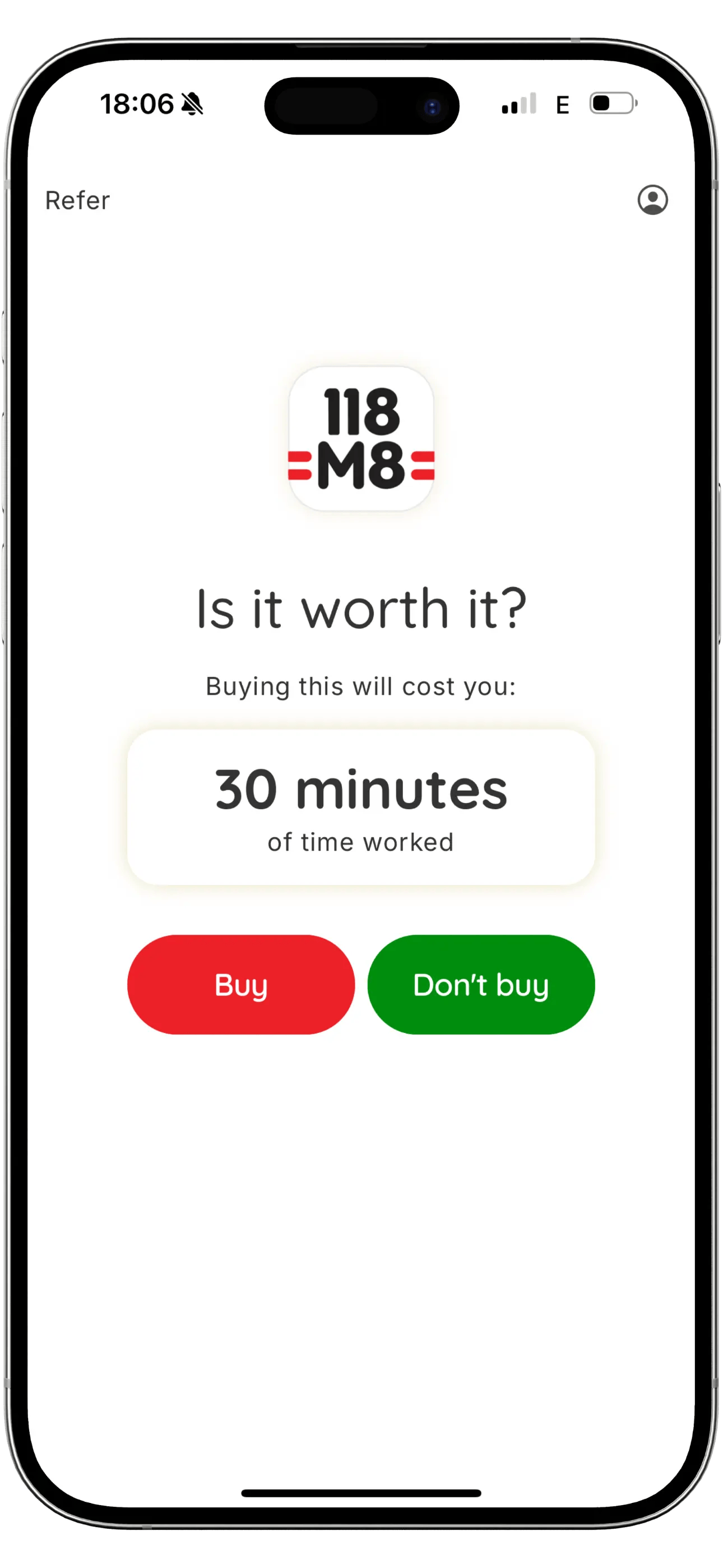
Credit scores tend to improve when your money life looks predictable: bills paid, balances manageable, fewer “panic” applications. 118M8 helps with the everyday part by turning prices into hours worked so you can pause before you spend.
- Sense-check purchases in time, not just pounds
- Tap “Sleep on it” and get a 24-hour reminder
- Track the wins when you skip something and keep momentum
Keep learning: Blog home · Credit Scores · Subscriptions
Frequently Asked Questions
Why has my credit score gone down even though I pay on time?
Common causes are higher utilisation (especially if your statement balance was high), a recent hard search, a credit limit change, or address and electoral register details that don’t match after a move. The report usually shows what changed.
How long does a credit score drop last in the UK?
A utilisation dip may recover after your next statement cycle once balances are lower. Hard-search impacts are typically smaller and fade with time. Missed payments can affect your file for longer, so the priority is to stabilise the account and stay consistent.
Does checking my credit score lower it?
No. Checking your own score is a soft search. A lender search as part of a credit application may be recorded as a hard search.
Why is my score different on Experian, Equifax and TransUnion?
They use different scoring models and ranges, and lenders don’t all report to every agency. Compare the underlying report details and the banding shown next to your score.
What should I do if I see an account I don’t recognise?
Contact the lender and the credit reference agency immediately to dispute it. If you’re worried about ongoing misuse, consider protective steps such as CIFAS Protective Registration.